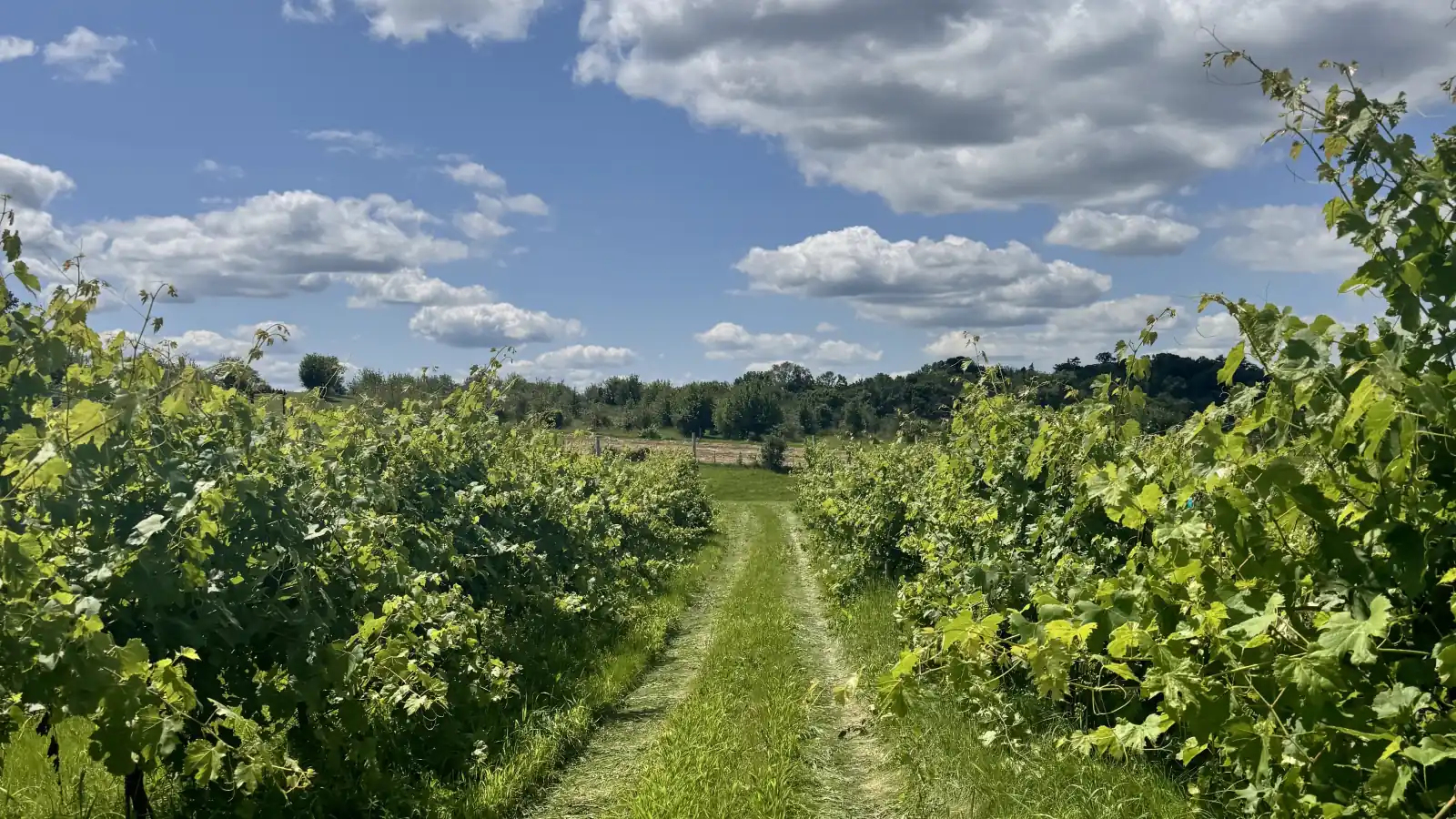
Cold-hardy grapes from the University of Minnesota's breeding program have helped shape Minnesota wine. Cruv maps wineries from the St. Croix River Valley and the Minneapolis–St. Paul area to Alexandria and southern Minnesota, and marks which tasting rooms are open right now.
45+ places in Cruv · 160+ upcoming events
Wineries in Minnesota
The state tourism office's winery guide sorts picks by area: Northern Minnesota, including the North Shore of Lake Superior; Central Minnesota, including Alexandria; the Minneapolis–St. Paul area, including the St. Croix River Valley; and Southern Minnesota. Most commercial vineyards lie in the state's southern two-thirds, and University of Minnesota Extension's grower surveys show most of the reported harvest coming from cold-hardy varieties the university developed. Two American Viticultural Areas (AVAs) reach into the state: Alexandria Lakes (2005), in Douglas County, and Upper Mississippi River Valley (2009), in the southeast and shared with Illinois, Iowa and Wisconsin. Plan a designated driver, a rideshare or a tour for each tasting day.
Cruv groups places by wine region where a state has established ones, and Minnesota has none in its list yet. Open the app to see every place Cruv lists here on the map, with what is open now and upcoming events.
Grapes grown in Minnesota
Minnesota's commercial wine vineyards are mostly in the state's southern two-thirds. In University of Minnesota Extension's grower surveys, cold-hardy varieties developed by the university make up most of the reported harvest, and the state tourism office cites Frontenac, Marquette, La Crescent and Itasca as examples.
Marquette
Red
Marquette is a red the University of Minnesota released in 2006. Extension's grower surveys list it among the top-producing varieties, and its wines show tart cherry, blackberry and baking spice.
Frontenac
Red
Frontenac is a red released by the University of Minnesota in 1996, suited to USDA zones 3 to 7. It makes red and rosé wines with black currant, plum and dark cherry notes, and the acidity can run high.
La Crescent
White
La Crescent is a white released by the University of Minnesota in 2002 and listed among the top-producing varieties in Extension's grower surveys. It makes a light, aromatic, high-acid wine with citrus, pineapple and apricot notes.
Frontenac Gris
White
Frontenac Gris is an offshoot of Frontenac with light purple-gray berries, made as a white wine that can turn pink or orange in hotter, riper years. Tasting notes include apricot and peach, with high acid.
Frontenac Blanc
White
Frontenac Blanc is a white offshoot of Frontenac that has been available since 2012. Wines show stone fruit, white grapefruit and herbal notes with high acid, and the vines are generally suited to USDA zones 4 to 7.
Itasca
White
Itasca is a white the University of Minnesota released in 2017. Extension describes it as more vigorous than the university's other varieties, likens its wine to a dry-style Chenin blanc, notes lower acid and calls it a great food wine.