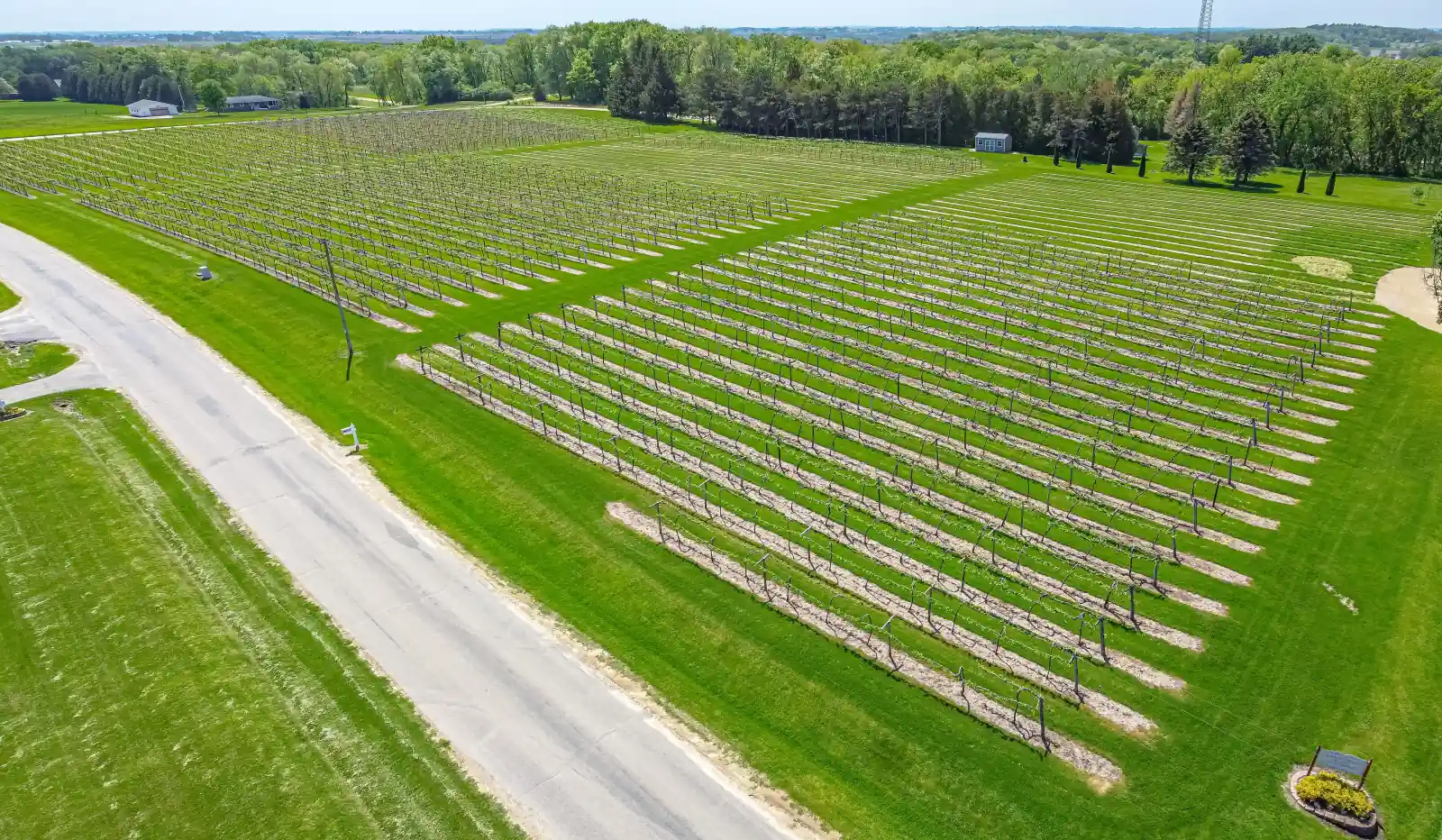
Wisconsin's wine map in Cruv starts on the Door County peninsula, which lies between Green Bay and Lake Michigan, and reaches wineries across the rest of the state. From Door County to the rest of the state, Cruv shows who is open now.
55+ places in Cruv · 100+ upcoming events · 1 wine region
Wine regions in Wisconsin
Door County
9 places in Cruv
Door County occupies a peninsula in northeast Wisconsin, between Green Bay and Lake Michigan. Wineries here are known for cherry and apple fruit wines. The Wisconsin Ledge AVA, established in 2012, includes the peninsula and extends south.
Cold-hardy hybrids lead what Wisconsin growers have planted, and several came from University of Minnesota breeding. A 2011 Wisconsin Grape Growers Association survey puts these six among the most widely planted varieties.
Frontenac
Red
Frontenac is a University of Minnesota red released in the mid-1990s for the Upper Midwest. Wisconsin growers have planted it widely, and it goes into dry reds, rosé and port-style wines with cherry and dark-fruit flavors.
Marquette
Red
Marquette is a University of Minnesota red, cousin of Frontenac, that is very cold hardy and resists common vine diseases. Wisconsin growers have planted it widely, and its wines are complex, with cherry and spice notes.
Maréchal Foch
Red
Maréchal Foch is a French-bred red hybrid that ripens very early and carries small, dark berries. Wisconsin growers have planted it widely, and its wines range from light, fruity reds to fuller reds and port-style bottlings.
La Crescent
White
La Crescent is a University of Minnesota white that handles hard winters well. Wisconsin growers have planted it widely, and it makes dry or sweet wines with apricot, peach and citrus aromas.
St. Pepin
White
St. Pepin is a cold-hardy white bred by Wisconsin grape breeder Elmer Swenson. It makes a fruitier style of wine, also works as a table or juice grape, and has the hardiness and low acidity that suit ice wine.
Frontenac Gris
White
Frontenac Gris is a gray-berried bud sport of Frontenac that the University of Minnesota selected. It grows much like its parent, is very cold hardy, and suits table and dessert wines with peach, apricot, citrus and pineapple aromas.